Questers outing to Steam Museum 25 November 2026

We left Andover for our hours drive to Swindon museum arriving in time for a coffee in the Platform One cafe before our guided tour at 11:00.

Our guide, Phil, was a ex worker from the rail yards.

Swindon was chosen as a central site for GWR repair and depot in 1841 when the railway line arrived from London.
Construction started then, with the first workshops opening for repairs in 1843. The first locomotive built entirely at Swindon, The Great Western, was completed in 1846.
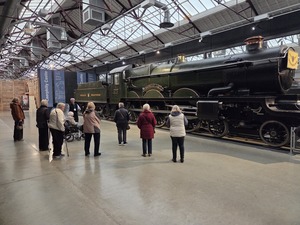
         

The works grew to employ over 14.000 people at its peak before closing in 1986.

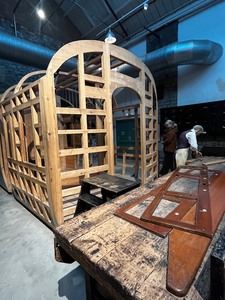
Phil took us through the early years. Showing us the equipment used and offices.

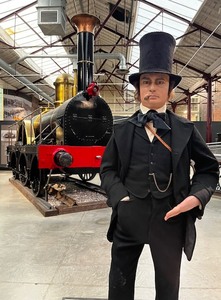
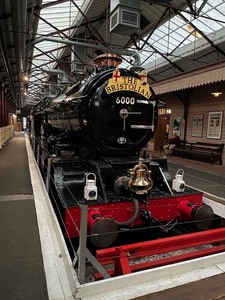
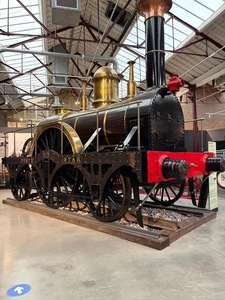
Then on to the best part, the beautiful huge steam engines. All kept in immaculate condition.
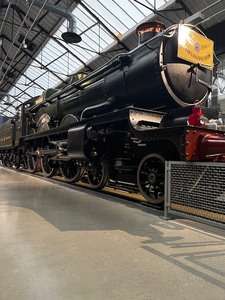
         

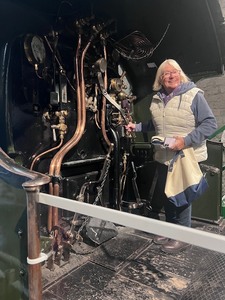
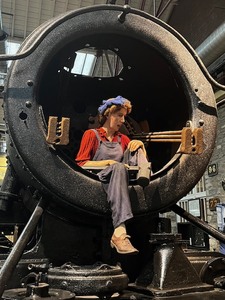
We were able to have a go at signalling, riding on the footplate of a moving train feeling the movement through the floor. Also walking underneath a locomotive.

Phil was informative and enthusiastic which is always good. He also told us about the town as it was all based around the railway with generations all employed there.
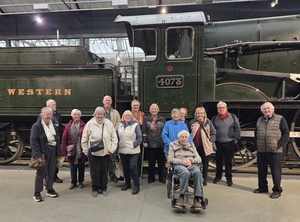
         

I would recommend any of our members making the drive over to enjoy the museum.

We finished around lunchtime when some stayed on to explore the museum whilst some of us went to the outlet for a well earned lunch. The Christmas decorations were very sparkly and the locomotive at the food hall was bedecked with Christmas wreaths.

Taking advantage of Black Friday offers was obviously good fun too!We all enjoyed the day, please join us on our next Questers trip in January 2027.

Pam Shadick
 

West Berkshire Museum and Canal Boat Outing

Questers visit to West Berkshire Museum (WBM) and Canal boat trip from Newbury Wharf : Thursday 10th September 2026.


On a pleasant day in September, 13 intrepid U3A members met to start the day with a coffee in the WBM café followed by a self-guided tour of the Museum. The Museum is housed in two of Newbury’s most historic buildings. The Cloth Hall was built in 1627 by Richard Emmes, a master carpenter for the Newbury Corporation as a cloth factory. Originally part of a larger range of buildings with a courtyard in the centre, the building was subsequently used as a workhouse, hospital and school before being used for storing corn from 1829 until its conversion to a museum. It holds various artworks and collections related to Newbury and West Berkshire.


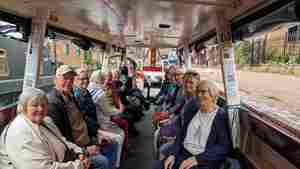
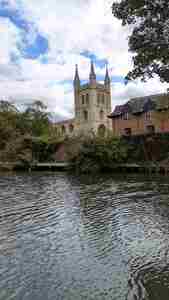
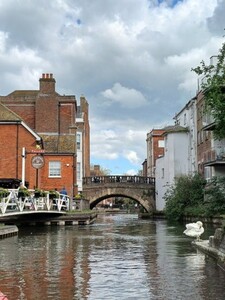
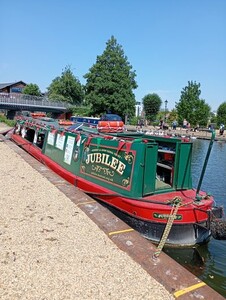
We then walked the 100 yards or so to the wharf where the Jubilee was moored. It is a traditional canal boat, seating up to 25 passengers. Once we were all on board the canal boat trip commenced. As we travelled through Newbury the boat crew (all members of the Kennet and Avon Trust) provided a very interesting commentary on the history and architecture of Newbury (some Jacobean cottages were highlighted) including going through one lock and a swing bridge. I certainly saw parts of Newbury I had never seen previously and was surprised to see there was a privately owned island in the middle of the town with a number of dwellings on it. After approximately 35 minutes we reached a what is known as a “winding hole” a section of the canal that has been specially widened so that narrowboats and barges can turn around. The boat was turned and we commenced our reverse journey. The knowledgeable onboard KA Trust crew answered all our questions and pointed out items of interest along the way.


Once we had all disembarked, we thanked the crew for and excellent trip. A number of us then went to a local restaurant for lunch after an extremely interesting and enjoyable trip.

Kevin Barter

QUESTERS VISIT TO BUTSER ANCIENT FARM, WEDNESDAY 17 JUNE 2026

On an indifferent weather day in June, 18 members met at Butser Ancient Farm for a guided tour by Therese, an experimental archaeologist, who was the font of knowledge on both the archaeology and history of the site. Butser is an open air museum near Petersfield, Hampshire that features experimental reconstructions of prehistoric, Romano-British and Anglo-Saxon buildings. It was actually started in 1972 at a site a few miles away from the current location by Peter Reynolds. Butser is a not-for-profit Community Interest Company which focuses on education and research and has over 35,000 school children visiting every year. 


Therese showed us round the different types of dwelling each of which has been built replicating the footprint and archaeological data from known existing archaeology sites, such as Danebury,  over the last 50+ years. There are over a dozen buildings on the site and each has been reconstructed after meticulous research and many months of work. Therese explained that the walls of each building were of multiple different materials to investigate durability and maintenance required, they could be either round or straight sided to show the progression of techniques as the inhabitants became more sophisticated and changed from hunter gatherers to farmers, for example one building had wattle and daub on one wall and lengths of wood on another and apart from the tiles on the roman villa the roofing materials were educated guesswork only. In the various Stone, Iron and Bronze age houses there were various tools and items of rudimentary furniture along with open fires.


The Roman Villa is based on a wing from an excavation at Sparsholt between 1965-72 and has a functioning underground heating system. In 2017-18 the Villa was renovated including re-painting the walls based on excavated plaster remains showing original colours and patterns, and installing a replica mosaic floor in the central room. This took over 120,000 mosaic pieces and 1000 hours. The villa is furnished with items representative of Roman furniture and outside is a typical roman garden planted with the kind of plants that would have been grown when the Romans were living in Britain.


The most modern buildings on the site are Anglo Saxon in construction and are based on the results of excavations carried out nearby at the village of Chalton. Both buildings are of similar size but built in different ways to test different theories about construction techniques.

The site hosts many volunteer groups who re-enact living in the buildings and testing various cooking and agriculture techniques which are all part of the education and research purposes of the farm. Overall, the members found it a very interesting and educational trip which concluded with a pre-booked lunch at a nearby pub, the Hampshire Hog.

Kevin Barter