Photography Group’s Meeting October 2022

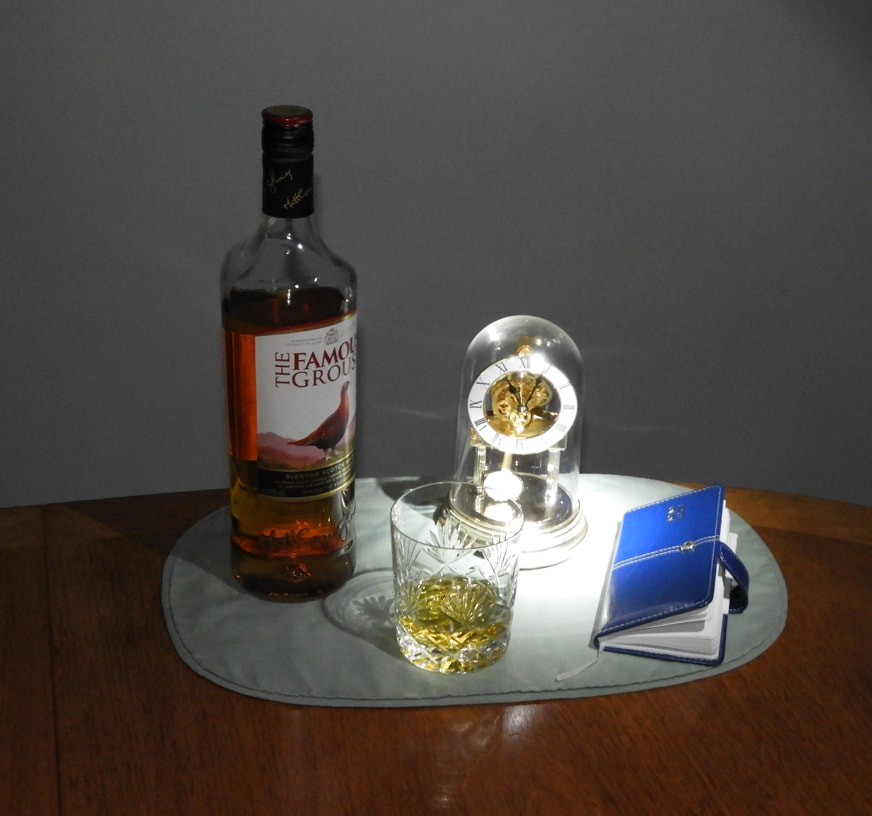
October’s Best of the BestNight cap by Rosemary Crumplin
Click on image to zoom

The Group met at 10:15 on 10th October with the theme ‘Still Life’.
It was interesting to see how members interpreted still life compositions – it was considered by many that a live parrot sitting still on its owners arm was not still life!

John Hawke proposed a change to the schedule – instead of voting for best picture/best portfolio, he suggested just voting for best picture in each portfolio and then voting for the ‘best of the best’. This would allow more names on the website slide show with the ‘best of the best’ displayed on Group News. This was agreed unanimously. Then he forgot to initiate voting for the ‘best of the best’ – a prime example of short term memory loss! This was resolved by posting all the photographs to attendees and getting votes by e-mail. The best picture voted for by most people was ‘Night Cap’ by Rosemary Crumplin.

John Clark has been having problems with his camera not taking pictures even though the image was on the screen along with the display of camera settings – it seemed that there was an intermittent shutter release fault. (a subsequent visit to Castle Cameras in Salisbury resulted in many helpful suggestions with the conclusion that the camera was not focussing on the subject)
John Hawke tried ‘focus stacking’ images on a recent trip to Devizes with AHA. The intention was to take several pictures of the same scene and use Photoshop to blend the ’stack’ of photographs to remove transient people/traffic from the scene – he found that 10 photographs in the stack were insufficient to remove transients, with ghost images remaining in the final blended picture. This prompted a discussion about focus stacking in general with special reference to its use for increasing the depth of field for macro photography. It is intended to return to this topic at the next meeting.

Theme for next meeting is ‘Little and Large Mix’. (there was considerable debate at the meeting regarding what this meant!)
Questers Group Visit to Thatchers Cider Mill

This proved to be a most interesting and enjoyable visit, although the generous inclusive tastings of some of the many ciders produced on site certainly helped provide a feel-good element to the day!

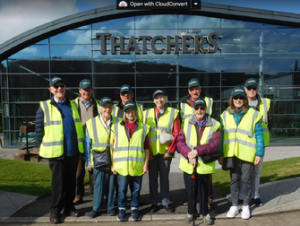
We arrived in plenty of time to commence our guided tour with the ever-informative Sally at 11.00. Our visit coincided with the busy period of main crop cider apples, and there were three large loads awaiting processing at the crushing mill. It is at harvest time that the mill is busy, processing all the apples into juice which goes into extended storage, with the residue sold on for cattle food.
They make cider all the year round, blending different apple varieties to produce the desired flavour. Depending upon the weather, apple flavours can vary sufficiently to require different proportions of each type to produce a consistent taste over the years. Over time tastes change, and Thatchers are constantly innovating. They make three or four unique new blends each year which are test marketed over the bar at the company owned on site Railway Inn.
Thatchers are the largest independent cider manufacturer in the UK, and are second only to Strongbow (owned by Heineken) in total sales. The company is a real success story and has grown its turnover under the present father & son (fourth generation Thatchers) from £2 million to £138million during the past 20 years. We noticed new and extensive investment all around us during this tour which was completed with an excellent meal at the Railway Inn (and more cider).

Ron Bryan (on behalf of Norma who was unable to attend)

Anton u3a Questers Group Report on Visit to Eling Tide Mill and New Forest Visitors Centre

The mini bus arrived in Lyndhurst in plenty of time for a couple of hours at the New Forest Centre which provides visitors with a comprehensive history about the newest of our National Parks. We learned a lot about the wildlife and fauna, ranging from ancient woodlands through downland heath; noting that in some cases these were very rare. The various roles of the Forestry Commission, National Park management, Commoners, Verderers and the Public’s interests were explained and displays showed how they are balanced in the best interests of preserving the forest in perpetuity.

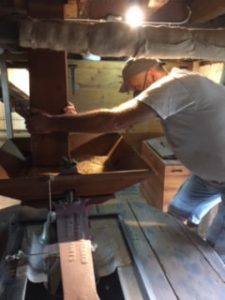
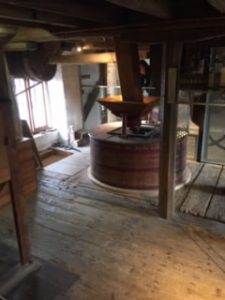
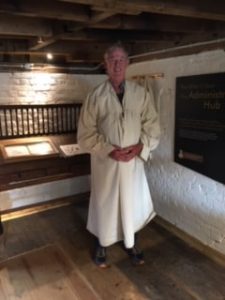
Moving on to Totton in time for lunch at either the Mill café or the adjacent Anchor Inn, we were in good time to meet our most informative guide who showed us around the mill which was working.
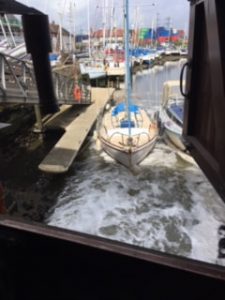
The present Mill structure dates back more than 200 years; however a Mill on this site was noted in the Doomsday Book. At Eling the river Test is tidal, and one of the creeks has a dam which features sluice gates which automatically allow incoming water to pass, but shut when the tide turns. At low tide this results in a ‘head’ of water about 50 cm high, which when released provides sufficient energy to power the Mill for about 6 hours. There are, of course 2 tides per day.
Apparently tide mills were once a common feature along the British coast line (there were 7 in Southampton Water alone), but now only two working mills remain; the other being in Sussex which has been recently restored. This makes the Totton mill rather special and very much worth a visit. In all yet another very good day for the Questers who attended.
Thank you to Chris Coffin who did the initial preparation for this trip; and to the ever cheerful Robert Kemp, our driver, without whom the trip would not have been possible.

Norma Bryan